Seasonal Porch planning

How to plan a fall porch display in Greenville, SC

Photos, scale, color, care, safety, and timing for a polished entrance in Greenville, Travelers Rest, and Upstate South Carolina.

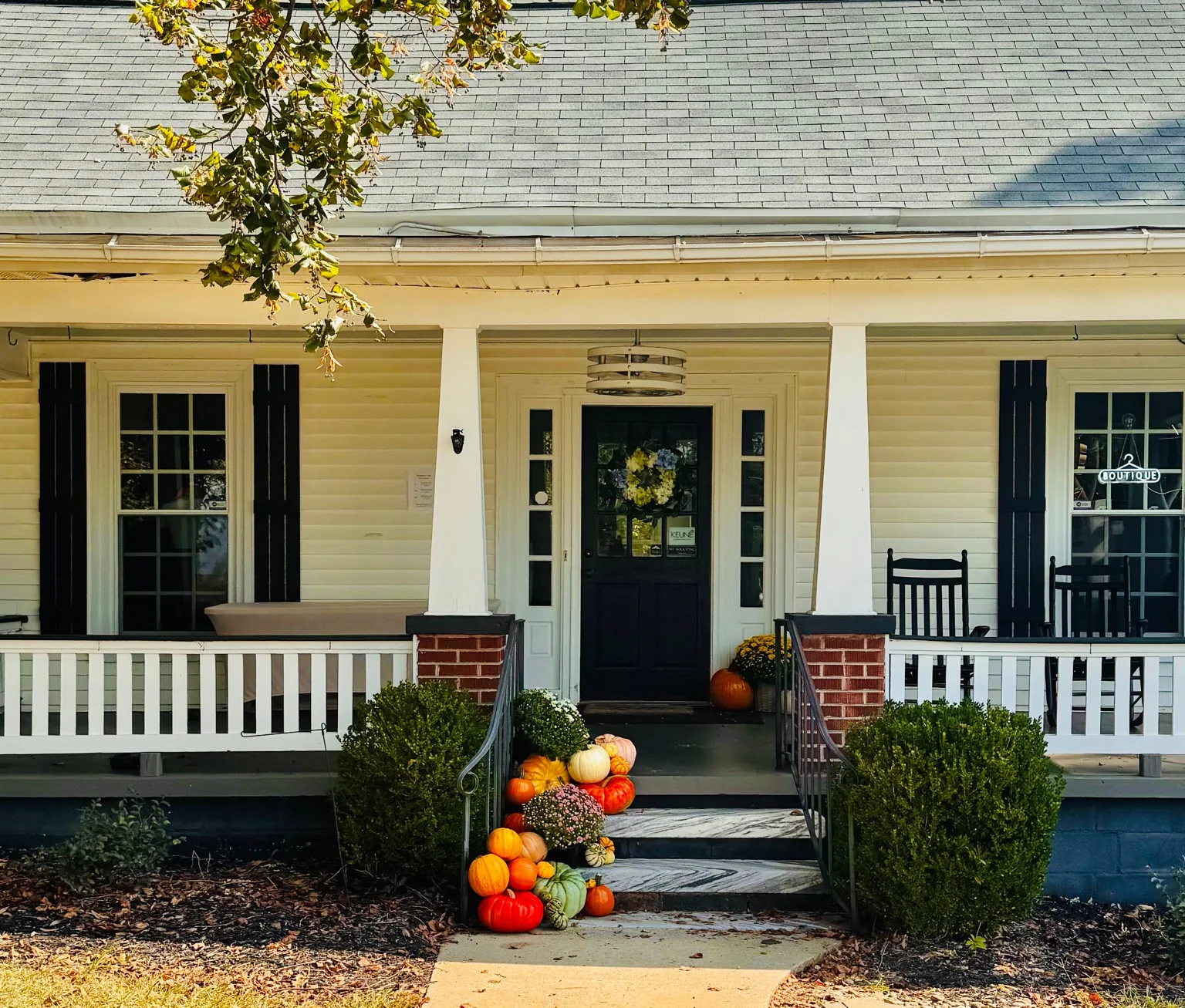
Professionally designed fall porch with layered pumpkins, gourds, mums, and hay

A beautiful fall porch begins before the first pumpkin is placed. The best displays are planned around the entrance itself: its width, steps, architecture, daily traffic, colors, and visibility from the street.

That matters especially in Upstate South Carolina, where the calendar may say fall while the weather still brings strong sun, humidity, and heavy rain. A thoughtful plan helps the display feel finished, keeps the entrance usable, and makes natural materials easier to care for throughout the season.

Whether you are decorating your own stoop or considering professional fall porch design and installation, use this guide to make the right decisions before materials arrive.

Start with the entrance, not a pumpkin count

A compact stoop, a standard covered porch, wide cascading steps, and an estate-scale entry do not need the same amount or arrangement of material. More pieces do not automatically create a better result. The goal is to use enough visual weight for the house without making the entrance feel crowded.

Stand where visitors first see the home and notice:

  • Whether the entrance is symmetrical or naturally favors one side.
  • The width and depth of the landing and each step.
  • Columns, railings, planters, benches, sidelights, and door color.
  • How far the display must carry visually from the street or drive.
  • The door swing and routes used by guests, packages, strollers, or mobility devices.
  • Sprinklers, roof runoff, strong afternoon sun, and wind exposure.

Take photographs that make planning easier

Clear porch photographs answer many design questions before installation day. Take them in daylight after moving temporary clutter:

  1. One straight-on photograph showing the full entrance, landing, steps, columns, and nearby planters.
  2. One angled photograph showing porch depth and the side of each step.
  3. One close photograph of the surface, threshold, and anything that must remain.
  4. A street or driveway view when a large display must read from a distance.

Include the number of steps and approximate usable width and depth. Mention any item that cannot be moved.

Choose a display scale that fits the architecture

The package should follow the entrance—not the other way around.

Entrance Useful design direction
Small stoop or single-door landing A focused arrangement with one strong anchor and restrained supporting pieces.
Standard porch or modest steps A fuller layered composition that creates depth without blocking circulation.
Wide porch, double doors, or cascading steps Repetition, multiple anchor points, and enough height to connect the display to the architecture.
Expansive, multi-level, or multiple-entry home A site-specific composition planned around sightlines, scale, and more than one viewing angle.

The Seasonal Porch uses those same entrance types to organize its four Fall 2026 display scales. Package quantities are design guides because the size, shape, and character of natural materials vary with the harvest.

Select a palette before individual pieces

A restrained palette usually looks more intentional than every available fall color used at once. Start with the home’s brick, stone, siding, trim, door color, and existing planters.

  • Traditional warmth: orange, rust, gold, burgundy, and warm green.
  • Soft neutral: white, cream, blue-gray, pale green, and muted orange.
  • Collected heirloom: orange mixed with dusty green, blush, cream, and textured specialty varieties.

Contrast matters. Pale pumpkins stand out against dark brick or a stained door, while deeper orange and green add weight to a light entrance. Repeating two or three colors creates rhythm without making a large display feel random.

Build the arrangement from large to small

A layered fall porch usually needs several visual roles:

  • Anchors: the largest pumpkins, hay bales, or existing planters that establish height and weight.
  • Structure: medium field and specialty pumpkins that carry the arrangement across the landing or steps.
  • Transitions: smaller pumpkins that soften changes in height.
  • Detail: pie pumpkins, gourds, and natural accents viewed at close range.
  • Living color: optional mums that repeat color and add softness.

Place the anchors first, step back, and check the view from the walk or driveway. Add medium pieces next, then smaller forms. A formal, symmetrical entrance may suit two balanced groupings; an asymmetrical porch often works better with one dominant arrangement and a smaller visual echo.

Protect the entrance and preserve everyday access

Keep the door swing, threshold, handrails, lighting, cameras, house numbers, and primary walking route clear. Check the arrangement from inside and outside the door. Large pumpkins should be stable, and elevated pieces should not be able to roll onto a step.

Begin with a clean, dry surface. Use discreet protection where moisture or plant containers could affect wood, painted concrete, porous stone, or another finished material. Avoid pressing damp hay or tightly packed natural materials directly against siding and trim. Confirm HOA rules before ordering, and disclose pets, small children, deer activity, or irrigation that could affect placement.

Plan for Upstate sun, rain, and humidity

Pumpkins, gourds, mums, cornstalks, and hay are natural materials. Their appearance and useful display life depend on their condition at installation and the weather afterward.

  • Support a pumpkin’s body rather than carrying it by the stem.
  • Keep intact pumpkins on a clean, dry surface with some airflow.
  • Inspect the display after heavy rain and several times each week.
  • Remove any piece that becomes cracked, soft, leaking, or unstable.
  • Do not let irrigation repeatedly soak the display.
  • Water mums at soil level and let excess water drain away from surrounding materials.

Clemson Extension’s South Carolina chrysanthemum guidance explains why regular watering and well-drained conditions matter. No responsible installer can promise that every natural item will age at the same rate; exposure, wildlife, and weather affect each porch differently.

Decide how much of the process you want to handle

A do-it-yourself display can be rewarding when the entrance is small, you enjoy sourcing materials, and you have time and a vehicle for loading, arranging, care, cleanup, and eventual removal. Professional installation becomes more valuable when:

  • The porch is large or visible from a distance.
  • Wide steps require a cohesive composition.
  • Several pumpkin sizes and varieties must be sourced.
  • Materials are difficult to transport.
  • The homeowner is busy, traveling, or managing a second home.
  • The finished result matters more than the shopping and setup experience.

The Seasonal Porch is a complete design, sourcing, normal-route delivery, and installation service—not ordinary pumpkin delivery. Optional follow-through can include a limited Thanksgiving refresh or scheduled end-of-season pickup when separately approved.

Understand the Fall 2026 reservation process

Joining the waitlist is the first step, but it does not reserve materials, a package, or an installation date.

  1. Join the waitlist for the opening announcement.
  2. Choose a display scale and share clear porch photographs.
  3. Provide palette preferences and details to include or avoid.
  4. Allow Landscaping Jents to confirm fit, service area, route, and available materials.
  5. Approve the estimate or invoice and pay the required deposit to reserve the installation.

Current package details, travel information, and optional services remain on the authoritative Seasonal Porch page.

Fall porch planning checklist

  • Straight-on, angled, and street-view photographs.
  • Approximate landing and step dimensions.
  • Door swing and a clear walking route.
  • Traditional, neutral, heirloom, or designer-led palette.
  • Existing planters or décor that must remain.
  • Sun, rain, irrigation, and wind exposure.
  • HOA or neighborhood requirements.
  • Pets, children, deer, or other wildlife concerns.
  • Preferred installation week.
  • Interest in a Thanksgiving refresh or end-of-season pickup.
Helpful tip: A little preparation makes it much easier to create a fall entrance that suits the home instead of looking like materials were simply placed at the door.

Ready to plan your fall entrance?

Preview the four display scales or join the reminder list for the Fall 2026 opening announcement.

Call nowRequest service